Water Pressure Diagnosis checks residential supply readings, fixtures, and pressure equipment. Testing and access affect the scope; call for a job-specific estimate.
How to Diagnose Whole-House Pressure Loss in Boise, ID
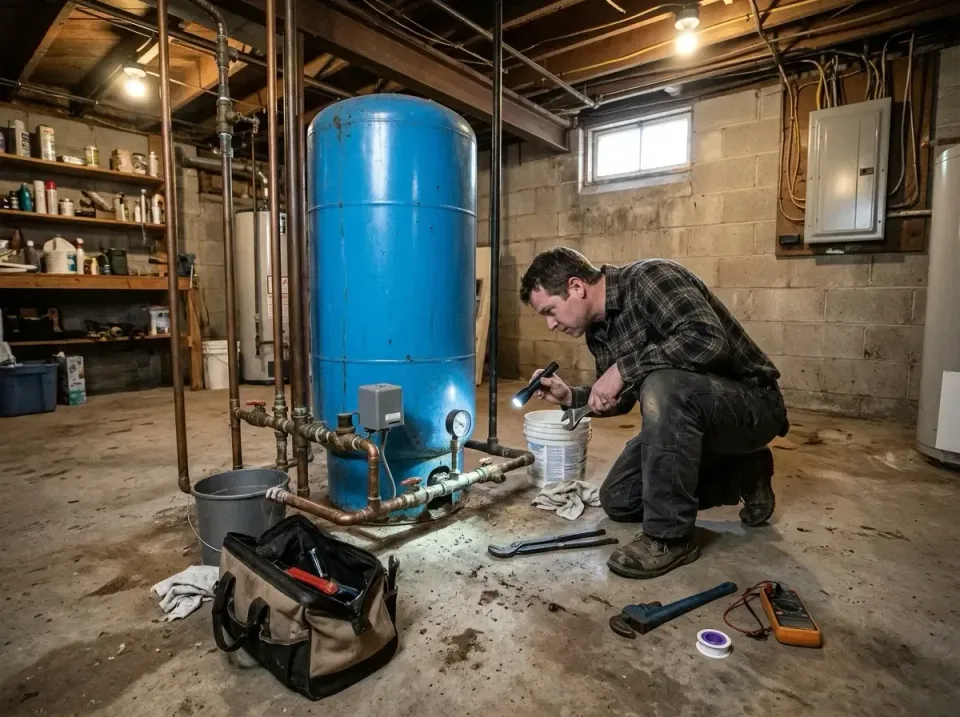
How Can You Diagnose Water Pressure Loss in Boise?
When pressure drops at several fixtures, check whether the trouble affects hot water, cold water, or both before changing anything. A sudden faucet slowdown throughout the house points toward a shared supply or pressure-system issue, not several failed fixtures at once. Start with the pattern.
-
Compare fixtures: Test a nearby faucet and an upstairs shower to see whether the drop is house-wide.
-
Check the source: Note whether your home uses the Boise municipal water system or a private well.
-
Consider power: Winter power outages can interrupt pressure tanks and pumps; after an outage, check whether a well system has power before drawing conclusions.
-
Prepare access: In Downtown Boise, identifying the main shutoff and clearing the utility area helps a technician begin testing without delay.
Near Boise Airport, record when the pressure changed and whether other fixtures were running. We can use those details to trace the likely cause instead of guessing at a fixture.
What Does the Pressure Pattern Tell You?
If every faucet and shower weakens at once, look upstream of the fixtures; if just one faucet is affected, its aerator or local supply may be the issue. Record which fixtures are running and whether the problem affects hot water, cold water, or both.
A useful first check is a hose-thread pressure gauge at an accessible connection, with fixtures closed, followed by a reading while water runs. The first reading is static pressure; the second shows how much pressure falls under demand.
A typical residential range is 40–60 psi, but readings need context: a single number cannot identify a blocked line, failing regulator, or supply problem by itself.
On the Boise River Greenbelt, irrigation use nearby may coincide with changing demand, but a timing overlap does not prove the municipal supply is at fault. Summer heat increases irrigation demand and water use, so note whether pressure changes at the same time each day.
That pattern helps distinguish a supply fluctuation from a fault inside the home. Our testing compares readings at several fixtures and checks the pressure under flow before recommending a repair.
Could Boise’s Dry Climate Affect the Diagnosis?
Boise and the Snake River Plain have semi-arid conditions, so a small outdoor leak may leave less obvious wet ground during dry weather. Inspect visible plumbing and the meter area for signs of ongoing water use, but do not assume a dry yard rules out a leak.
Freeze-thaw cycles can stress outdoor water lines; after a season of temperature swings, a damaged buried line may show up as a gradual or sudden pressure change. Avoid digging or opening a pressurized line without knowing its route and shutoff.
The Idaho State Capitol gives a familiar reference point for the kind of varied city properties we serve, but building age and pipe condition matter more than a neighborhood label. We look at accessible lines, the main shutoff, and pressure behavior before proposing work. For a single upstairs shower symptom, our guide to upstairs shower pressure loss in Boise explains why elevation and fixture-specific restrictions can matter.
When Should You Call a Plumber Instead of Adjusting Parts?
A homeowner can safely compare fixtures, remove and rinse an accessible faucet aerator, and record pressure readings if a suitable gauge and safe connection are available. Stop before adjusting a regulator, opening a pressure tank, or inspecting pump wiring. Those steps can expose you to pressurized water or electrical hazards, and changing a setting before recording it can hide the original fault.
If multiple fixtures remain weak, pressure surges without warning, or the well pump repeatedly starts and stops, arrange professional testing. Model plumbing codes trigger pressure regulation above 80 psi, so a high reading deserves investigation rather than an improvised adjustment.
We inspect the pressure-reducing valve and supply path, then explain what the readings show. Idaho Plumbing Pros uses that sequence to diagnose before replacing parts.
What Does a Useful Whole-House Test Include?
A proper diagnosis compares pressure at rest and while water is flowing, then checks more than one fixture. This helps separate a supply-pressure problem from a restricted line or equipment fault.
On a private well, the pump, pressure tank, and switch are part of the system; on municipal water, the service entry and pressure regulator deserve attention. A technician may also ask when the trouble began and whether it changes when several taps run.
Keep notes on the affected fixtures and any recent changes, such as a power interruption or plumbing work. Our water pressure diagnosis process starts with measurements and accessible equipment checks, not an automatic part replacement. For a weak faucet that began suddenly, compare symptoms with our guide to sudden faucet flow loss.
Which Pressure Diagnosis Fits Your Boise Home?
The right repair path depends on whether your home draws municipal water or uses a well, and on what the pressure readings do under flow.
| Option | Best for | Key detail |
|---|---|---|
| Municipal supply pressure repair | Several fixtures weak on city water | Compare static and flowing readings at the service entry. |
| Well pump and pressure system | Low flow or repeated pump starts in a well home | Common switch settings include 30/50 psi; confirm the installed settings before adjustment. |
| Regulator diagnosis | High or unstable incoming pressure | Residential regulators are often set around 50–60 psi. |
| Booster pump assessment | Supply remains inadequate after testing | Sizing requires matching pump capacity to household demand. |
| Line or fixture restriction check | One area or branch has weak flow | Residential supply lines are commonly ½–1 inch nominal size. |
Seasonal irrigation can contribute to neighborhood pressure fluctuations, so record when symptoms occur rather than assuming a system failure. Keep basement utility areas clear so testing access is straightforward.
If heavy mountain snowfall delays access to a property, coordinate a safe path to the equipment. Hells Gate State Park and Idaho National Laboratory in Idaho Falls are useful regional reference points, not indicators of the water system serving a Boise home.
How to Prepare for a Pressure Check
A little preparation helps the technician compare readings without disturbing the evidence. Tell us whether the home uses city water or a well, and note when the pressure changes. Keep access clear.
-
Record the symptom: Write down which fixtures are affected and whether hot, cold, or both sides lose flow.
-
Locate the shutoff: Identify the main shutoff before the appointment; do not turn it unless needed to stop a leak.
-
Confirm the water source: Note whether the property uses city water or a private well.
-
Clear the work area: Make the water heater and nearby pressure equipment accessible, and protect stored items.
-
Show well equipment: If applicable, point out the pump and tank; do not open electrical covers.
-
Protect cold-space pipes: Insulate pipes in unheated garages and crawlspaces to reduce exposure to freezing conditions.
-
Plan for testing: The technician may test multiple fixtures, and a repair may require a temporary water shutoff.
Idaho State University in Pocatello, Lewis-Clark State College in Lewiston, Nez Perce National Historical Park, Pocatello Historic Downtown, and Redfish Lake are far-flung Idaho landmarks; they do not determine Boise pressure, but remind us that service conditions vary across the state.
Common Questions About Low Water Pressure Repair in Idaho
Why Does Whole-House Pressure Loss Happen Only When Several Taps Run?
When pressure drops only under combined use, the flowing-pressure reading can reveal whether supply capacity or a restriction is limiting demand. Record which fixtures are on and when the drop starts; summer heat can raise irrigation use and coincide with neighborhood fluctuations.
What Does It Cost to Diagnose Whole-House Pressure Loss in Boise?
Pressure diagnosis commonly costs $75–$200, with testing scope and access affecting the charge. If results point to regulator repair, the typical range is $150–$500 for parts and labor; Idaho Plumbing Pros can explain the findings and quote the indicated work.
Can I Adjust My Well Pressure Switch During Whole-House Pressure Loss?
No, do not change switch settings until the system has been checked and its existing settings recorded. Thunderstorms may briefly interrupt power to well pumps, so first note whether the pump has power and avoid opening electrical equipment.
Do Boise Plumbing Permits Apply When Repairing a Pressure Regulator?
Boise plumbing permits may apply to regulated alterations, so confirm requirements with City of Boise Planning and Development Services before work begins. Idaho plumbing permit rules should be checked with the local authority, and the Idaho Plumbing Code edition adopted for the job should be verified.
Should I Call a Plumber If a Whole-House Pressure Leak Is Hard to See?
Yes, call when multiple fixtures lose pressure, a meter indicates continued use, or the source is not visible; careful protection of finished spaces helps limit damage during inspection. Low summer rainfall can strain private wells, while exposed leaks may be difficult to spot near places such as Lake Coeur d’Alene or Tubbs Hill without checking the actual system.
Get Help Tracing Whole-House Pressure Loss
A whole-house pressure problem is best diagnosed by comparing what happens at rest with what happens while water runs. A hose-thread gauge can show whether readings sit within the common 40–60 psi residential range, but the cause still depends on the home’s supply and equipment. If the well pump cycles repeatedly, pressure swings, or several fixtures weaken together, avoid changing settings before the system is checked.
Cold winters increase freeze risk for exposed plumbing, so mention any vulnerable outdoor lines or recent damage during scheduling. Dry air can also make a small exposed leak harder to spot as water evaporates.
Whether you are near Downtown Moscow, Downtown Sandpoint, or Brigham Young University–Idaho in Rexburg, local weather and access can shape an inspection; Coeur d’Alene Resort is another regional landmark, not a Boise service boundary. Contact Idaho Plumbing Pros at (877) 773-0781 or request water pressure diagnosis.
Whole-house pressure loss service traces weak flow across a home and checks accessible supply piping. Scope and access shape the repair quote.
Low Faucet Pressure Repair checks faucet flow and accessible fixture parts; typical repair costs depend on the faucet model, replacement parts, and access.
Weak hot water pressure service for homes with restricted hot-side flow; repair scope and cost depend on parts, pipe access, and the source of the restriction.
We repair residential well pump pressure problems, checking pump operation and pressure controls; typical repairs run $200–$900 depending on pump condition and parts.
We repair residential booster pumps, checking pump condition and parts; jobs typically run $200–$900, depending on the pump. We serve homes near Downtown Moscow, Downtown Sandpoint, and Lake Coeur d'Alene.
We trace weak cold-water flow for homeowners, checking fixture connections and accessible supply piping; a diagnostic visit typically runs $75–$200, depending on testing and access.
We inspect and repair residential pressure tanks, including accessible well-system connections; typical repairs run $250–$900, depending on tank condition and access.
We trace abrupt pressure drops and repair accessible pipe or system failures; localized leak work commonly runs $150–$800, depending on pipe material and access.
We repair residential pressure-reducing valves, including accessible brass assemblies; regulator work typically runs $150–$500, depending on parts and labor.
Corroded pipe pressure repair addresses rust-thinned or narrowed residential piping, with scope and access shaping typical $300–$2,000 jobs.
Low Shower Pressure Repair checks shower valves and supply flow; typical repairs run $150–$500, depending on parts and access.
We repair well pressure switches for homeowners, checking switch contacts and wiring access; typical replacement runs $150–$400, depending on parts and access.
We repair water softeners restricting household flow, checking valves, resin tanks, and connections; access and component condition shape the scope for Idaho homes.
We clear accessible clogged water lines for Idaho homes; pipe material and access shape the quote. Boise’s semi-arid setting, the Salmon River region, and Bear Lake State Park mark varied local service conditions.
Filter pressure loss repair covers sediment-loaded cartridges and housings for Idaho homes; typical repairs run $100–$500, driven by filter type and access.
We remove or clean accessible faucet and shower flow restrictors for homeowners and property managers; fixture design and access shape the work and quote.
Grundfos Booster Pump Repair in Idaho: inspect pump operation, repair worn components, and review system fit. Call (877) 773-0781 to discuss scope.
Goulds booster pump repairs cover motor, control, and pump issues; typical repair runs $200–$900, depending on pump condition and parts.
We repair buried main water lines for Idaho homeowners and property managers, including accessible pipe sections; typical repairs run $500–$2,500, depending on excavation access and pipe material.
Cities & Towns
Service Areas in Boise
Select a city to find local low water pressure repair providers we cover in Boise.
Lincoln, ID83401Hailey, ID83333Priest River, ID83856Lewiston, ID83501Fort Hall, ID83203Bonners Ferry, ID83805Blackfoot, ID83221Kimberly, ID83341Bellevue, ID83313Ammon, ID83406Rigby, ID83442Pocatello, ID83209St. Anthony, ID83445Meridian, ID83642Mountain Home, ID83647Heyburn, ID83336Boise, ID83725Twin Falls, ID83301Chubbuck, ID83202Rupert, ID83350Grangeville, ID83530American Falls, ID83211Salmon, ID83467Hayden, ID83835
Show all 68 cities
Middleton, ID83644Post Falls, ID83854McCall, ID83638Rathdrum, ID83858Sugar City, ID83448Rexburg, ID83460Shelley, ID83274Aberdeen, ID83210Idaho Falls, ID83404Emmett, ID83617Caldwell, ID83605Malad City, ID83252Coeur d'Alene, ID83815Wendell, ID83355Gooding, ID83330Nampa, ID83687Filer, ID83328Orofino, ID83544Homedale, ID83628Kuna, ID83634Driggs, ID83422Jerome, ID83338Sandpoint, ID83864Kellogg, ID83837Garden City, ID83714Iona, ID83401
Get a Quote
Get a Low Water Pressure Repair Quote in Boise, ID
Share job details below or call our team directly. Phone: (877) 773-0781