Water Pressure Diagnosis checks residential supply readings, fixtures, and pressure equipment. Testing and access affect the scope; call for a job-specific estimate.
Why Water Pressure Falls When Multiple Taps Run
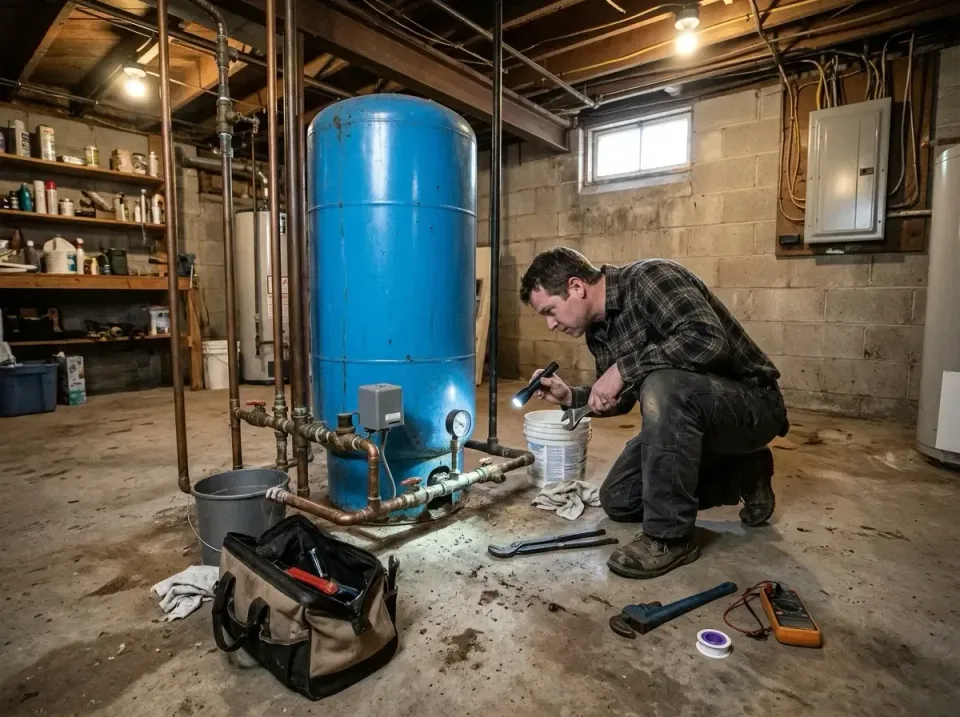
Why Does Water Pressure Drop When Several Taps Run?
Pressure often falls when your plumbing cannot deliver enough water to every open fixture at once. If low shower pressure shows up when someone starts a sink, the shared supply may be struggling rather than the shower itself. A sudden pressure loss across several rooms deserves attention; note which fixtures are running and whether the drop affects hot water, cold water, or both.
A plumber near me search can help you find local diagnostic support, but first record the pattern so the visit can focus on the cause. Around the Boise River Greenbelt, summer heat can raise irrigation demand and water use, adding pressure on some supplies. Our crew checks the system before recommending a repair.
Why Does Flow Weaken When Taps Run Together?
When pressure falls as several taps open, the system may be unable to keep up with the combined demand, or a restriction may be limiting flow. We compare what happens at different fixtures rather than assuming the nearest faucet is the problem.
In commercial water pressure assessment, that same principle matters: simultaneous use in washrooms or kitchens can reveal a supply limitation that a single running tap hides. For a home, write down which fixtures are open when the drop begins. That simple record helps separate a whole-supply issue from a problem limited to one branch.
A filter can also narrow the path water takes. A water filter pressure drop may appear as weaker flow around the home if the filter is clogged or overdue for service; checking its condition is a sensible early step.
We also consider the pressure regulator. Water pressure regulator repair versus replacement depends on whether the existing valve can be adjusted or has failed, not simply on the symptom.
Our Water Pressure Diagnosis starts by tracing the pressure change through the system. Small clues matter.
Could a Booster Pump or Pipe Be Limiting Flow?
A booster pump raises pressure when the incoming supply is insufficient, but adding one before testing can leave the real fault untouched. We first look for evidence that the supply itself is weak, then check whether a pump is appropriate for the system’s demand. If several fixtures lose flow together, that pattern may point to a shared supply issue; if only one branch is affected, the cause may be closer to that fixture.
Pipe material helps shape the investigation. Copper water tubing can serve a home for years, but joints, deposits, or a damaged section may still restrict flow.
In older properties, changes in pipe condition can make the pressure drop more noticeable whenever demand rises. A home water pressure troubleshooting guide can help you document symptoms, but it cannot confirm what is happening inside inaccessible pipework.
We test before proposing work. Near Shoshone Falls, Twin Falls, the landmark is a reminder of how water movement depends on available supply; at home, the relevant issue is whether the plumbing can deliver enough flow to open fixtures.
When Is a Simple Check Enough?
If the issue appears at one faucet, inspect its aerator for visible debris and see whether the flow improves after cleaning. That is a reasonable DIY step.
Do not dismantle a regulator, pump, or pressurized pipe assembly just to see what is inside; a mistaken adjustment can create leaks or worsen the pressure problem. If several rooms are affected, or the pressure falls sharply whenever another tap opens, it is time to have the system tested.
Public-building water pressure troubleshooting requires attention to how multiple users share the system, but the lesson carries over to a house: a repeatable demand pattern is useful evidence. Tell us which fixtures were operating and when the change occurred.
Idaho winters increase freeze risk for exposed plumbing, so mention any exposed or unheated sections if you suspect damage. Our team can explain findings plainly and identify whether the next step involves a restriction, valve, or supply capacity.
Which Repair Fits Pressure Loss Across Several Taps?
The right option depends on whether the restriction starts at the source, the pressure equipment, or one part of the plumbing. We verify flow after work so you can see whether the original symptom has changed.
| Option | Best for | Key detail |
|---|---|---|
| Municipal supply pressure repair | Homes connected to city water with a shared supply concern | Confirm whether the drop occurs throughout the property. |
| Well pump pressure repair | Private wells that cannot maintain delivery during household use | The well pump must match the system’s actual demand. |
| Pressure tank and switch repair | A well system with unstable delivery or repeated pump starts | Tank capacity is measured in gallons and must suit the system. |
| Clogged water line repair | A restriction suspected in the line serving multiple fixtures | Testing helps locate the affected section before opening pipe. |
After repair, ask for pressure verification with more than one fixture running.
How Do You Prepare for a Pressure Check?
A little preparation helps the technician compare your water pressure under ordinary household demand. Around Downtown Boise, summer heat can increase irrigation demand and water use, so include outdoor watering in your notes if it coincides with the problem. Keep the affected fixtures easy to reach.
-
Record the pattern: Note which taps are open when flow drops and whether the symptom affects the whole house.
-
Identify the source: Tell the technician whether the property uses city water or a private well; the residential water pressure system differs by source.
-
Track pressure changes: Describe the water pressure before and during fixture use so testing can reproduce the problem.
-
Share the locations: Point out the main shutoff and, for a well, the pump and tank locations.
-
Allow fixture checks: The technician tests pressure at multiple fixtures to compare readings and locate a shared restriction.
-
Mention line concerns: If a clogged main water line low pressure repair seems possible, describe any known damage or recent changes without digging or disconnecting pipes yourself.
Common Questions About Low Water Pressure Repair in Idaho
What If Pressure Only Drops When the Dishwasher and Shower Run Together?
Pressure that falls only during heavy combined use can mean the system struggles to meet demand, even if each fixture works normally by itself. Record which appliances and taps are running, then have a technician compare flow under that same combination.
How Much Does It Cost to Diagnose Pressure Loss When Several Taps Run?
Pressure diagnosis is typically $75–$200, with testing and access affecting the charge. If testing points to a regulator, repair is commonly $150–$500 for parts and labor; final quotes vary by scope, parts, access, and site conditions.
Can I Fix Pressure Loss Across Several Taps Myself?
You can clean a faucet aerator or check whether a filter needs routine attention, but avoid adjusting a pressure regulator or opening pressurized equipment. If multiple rooms lose flow together, Idaho Plumbing Pros can test the supply and pinpoint the restriction.
Does the Idaho Plumbing Code Set a Water Pressure Limit for This Problem?
Model plumbing codes trigger pressure regulation above 80 psi, but the applicable Idaho Plumbing Code edition and local adoption should be verified for your property. Ask the local authority about permit requirements before regulated plumbing alterations.
Could a Well Pressure Switch Cause Pressure to Drop When Several Taps Run?
Yes, a failing well pressure switch can interfere with how the well pump starts and maintains delivery as household demand changes. If the pump starts repeatedly or pressure swings during use, see our Well Pressure Switch Repair information and arrange a system check.
Ready to Get Help with Pressure Drops Under Load?
If water flow weakens whenever several fixtures run, note the affected rooms and arrange a proper check rather than replacing parts by guesswork. A single bathroom with weak flow may point to a local issue; a system-wide change calls for broader testing. Idaho’s cold winters can stress exposed plumbing, so mention unheated pipe areas when describing the problem.
-
Describe the symptom: Tell us which taps run when pressure falls.
-
Share the water source: Let us know whether your home uses municipal water or a well.
-
Plan the visit: Clear access to the relevant plumbing and pressure equipment.
For a water pressure plumber in Boise or elsewhere in Idaho, contact Idaho Plumbing Pros at (877) 773-0781. We’ll trace the likely cause, explain the options, and recommend work suited to your system. See our Low Water Pressure Repair service to take the next step.
Whole-house pressure loss service traces weak flow across a home and checks accessible supply piping. Scope and access shape the repair quote.
Low Faucet Pressure Repair checks faucet flow and accessible fixture parts; typical repair costs depend on the faucet model, replacement parts, and access.
Weak hot water pressure service for homes with restricted hot-side flow; repair scope and cost depend on parts, pipe access, and the source of the restriction.
We repair residential well pump pressure problems, checking pump operation and pressure controls; typical repairs run $200–$900 depending on pump condition and parts.
We repair residential booster pumps, checking pump condition and parts; jobs typically run $200–$900, depending on the pump. We serve homes near Downtown Moscow, Downtown Sandpoint, and Lake Coeur d'Alene.
We trace weak cold-water flow for homeowners, checking fixture connections and accessible supply piping; a diagnostic visit typically runs $75–$200, depending on testing and access.
We inspect and repair residential pressure tanks, including accessible well-system connections; typical repairs run $250–$900, depending on tank condition and access.
We trace abrupt pressure drops and repair accessible pipe or system failures; localized leak work commonly runs $150–$800, depending on pipe material and access.
We repair residential pressure-reducing valves, including accessible brass assemblies; regulator work typically runs $150–$500, depending on parts and labor.
Corroded pipe pressure repair addresses rust-thinned or narrowed residential piping, with scope and access shaping typical $300–$2,000 jobs.
Low Shower Pressure Repair checks shower valves and supply flow; typical repairs run $150–$500, depending on parts and access.
We repair well pressure switches for homeowners, checking switch contacts and wiring access; typical replacement runs $150–$400, depending on parts and access.
We repair water softeners restricting household flow, checking valves, resin tanks, and connections; access and component condition shape the scope for Idaho homes.
We clear accessible clogged water lines for Idaho homes; pipe material and access shape the quote. Boise’s semi-arid setting, the Salmon River region, and Bear Lake State Park mark varied local service conditions.
Filter pressure loss repair covers sediment-loaded cartridges and housings for Idaho homes; typical repairs run $100–$500, driven by filter type and access.
We remove or clean accessible faucet and shower flow restrictors for homeowners and property managers; fixture design and access shape the work and quote.
Grundfos Booster Pump Repair in Idaho: inspect pump operation, repair worn components, and review system fit. Call (877) 773-0781 to discuss scope.
Goulds booster pump repairs cover motor, control, and pump issues; typical repair runs $200–$900, depending on pump condition and parts.
We repair buried main water lines for Idaho homeowners and property managers, including accessible pipe sections; typical repairs run $500–$2,500, depending on excavation access and pipe material.
Cities & Towns
Service Areas in Boise
Select a city to find local low water pressure repair providers we cover in Boise.
Salmon, ID83467Rupert, ID83350Aberdeen, ID83210Homedale, ID83628Rathdrum, ID83858Emmett, ID83617American Falls, ID83211Coeur d'Alene, ID83815Sandpoint, ID83864St. Anthony, ID83445Preston, ID83263Orofino, ID83544Filer, ID83328Nampa, ID83687Soda Springs, ID83276Wendell, ID83355Fruitland, ID83619Eagle, ID83616Grangeville, ID83530Twin Falls, ID83301Ketchum, ID83340Hailey, ID83333Payette, ID83661St. Maries, ID83861
Show all 68 cities
Idaho Falls, ID83404Post Falls, ID83854Bonners Ferry, ID83805Kellogg, ID83837Sugar City, ID83448Hidden Springs, ID83714Lewiston, ID83501Malad City, ID83252Boise, ID83725Kimberly, ID83341Hayden, ID83835Bellevue, ID83313Mountain Home AFB, ID83648Pocatello, ID83209Rigby, ID83442Ammon, ID83406Victor, ID83455Gooding, ID83330Meridian, ID83642McCall, ID83638Blackfoot, ID83221Buhl, ID83316Garden City, ID83714Chubbuck, ID83202Burley, ID83318Shelley, ID83274
Get a Quote
Get a Low Water Pressure Repair Quote in Boise, ID
Share job details below or call our team directly. Phone: (877) 773-0781